-->

Saturday, 15 October 2016

Character - Cowboy influence map

Following on from my post concerning the influence map for the "Outlaw" character, here's one for the hero character. There isn't much variation in terms of clothing, only that it is usually a lot brighter than that of their villainous counterparts, plus the build of these characters tends to be more slight.

From here, I'll be experimenting with both characters shapes to properly evoke the character suggested by the sound clip and world choice. 


Character - Outlaw influence map

Now that my idea has been given the go ahead, I've started making solid plans on what I want the Outlaw character in my character project look like. Within the audio file itself, there's clear instruction on the colours needed within the design of the characters themselves, but what I've looked at here is merely the broad strokes at what signifies the "villainous outlaw" (and in some cases below, the anti-hero) within the Western genre. 


Friday, 14 October 2016

Character - Thoughts, Initial Reaction and Branding


Okay, So here goes. After starting the character project 'proper' a few weeks ago, I've neglected to document it's progression. So, to bring you up to speed, I received "Audio clip #10" and "Saloon (Western / Sci-Fi), Antiques Shop / Roadshow as my potential worlds.

As you can probably guess from the branding I went with the Western setting.


Below is a transcript of the audio clip. 


My ideas surrounding this scenario haven't really changed from my first reaction. The audio clip features two men - one quite weasley sounding whilst the other sounds like a square jawed american hero - arguing over the colour of their clothes. Immediately this screamed to me about seeing two really grizzly and gruff Cowboys squaring up to each other, the anticipation of a fight in the aire, and then the complete opposite happens; instead, they rather effeminately squabble over clothing. 

Over the weekend I will be further exploring the audio clip and how it can inform my creative decision when it comes to personifying these characters. I've already created some influence maps which I will be sharing shortly. 

Till next time, 

Ciao. 

Monday, 10 October 2016

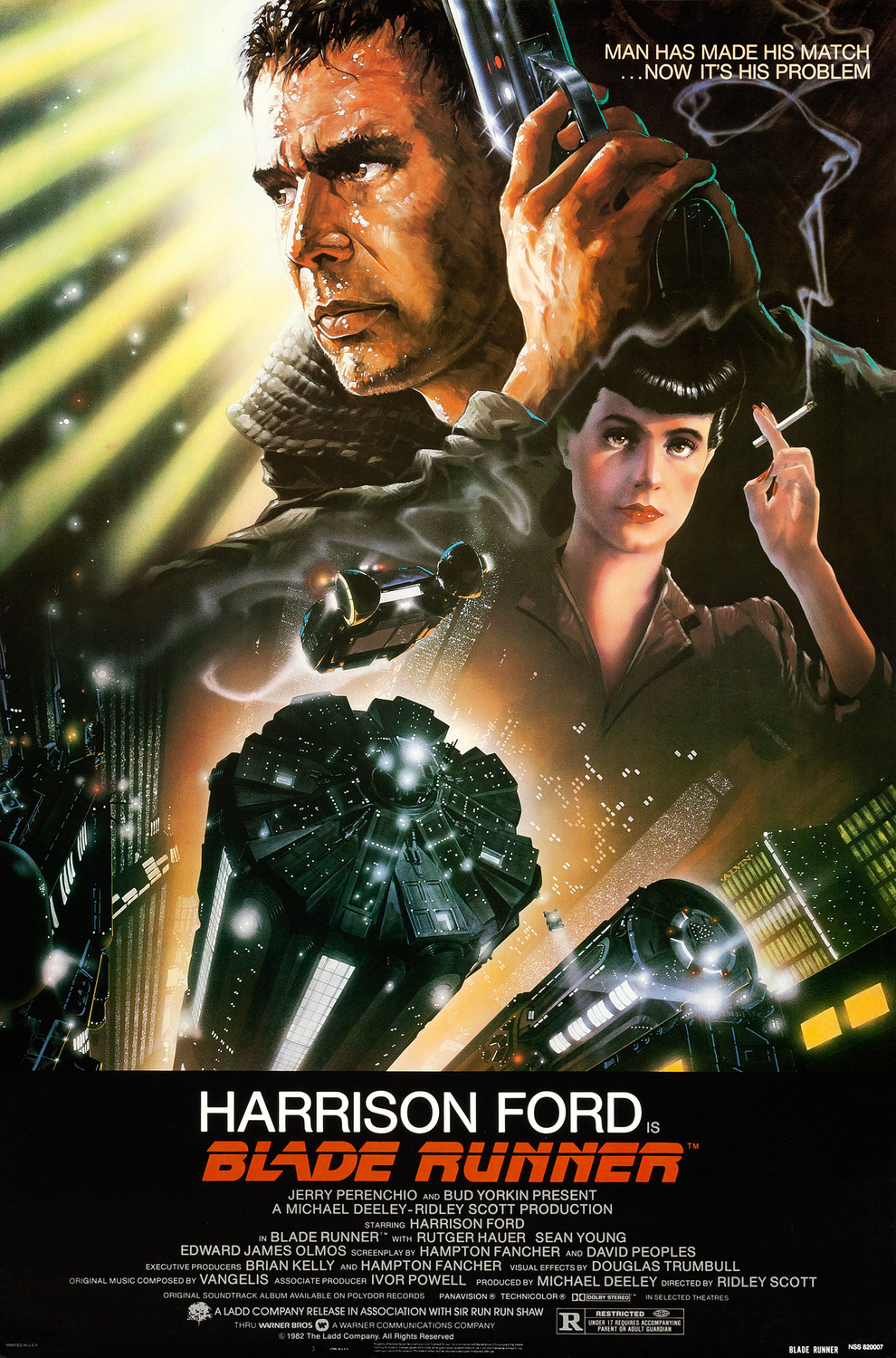
"Blade Runner" (1982) - Character Archetypes - A review


Fig 1.

"Blade Runner" (1982) directed by Ridley Scott, based on the short story "Do Android's Dream of Electric Sheep?" (1968) by Phillip K. Dick,  is a cyberpunk noir-thriller set in 2019 which centers on Rick Deckard, a retired Blade Runner - a detective that hunts down rogue androids and terminates them - as he is brought back into the fold and tasked with tracking down 4 rogue androids - or "Replicants" in this case.

Fig 2.
"Blade Runner" is an interesting example to focus on when aiming to analyse different character archetypes at play, as they are not so obvious at first glance. Deckard is the obvious hero here, he's the main character, our viewpoint and the one with whom our sympathies rest with as the film plays out. What's interesting here, is that we see very little evidence of Deckard's ordinary world, in fact, it is only really alluded to within dialogue. Kyle Anderson, writing for "Nerdist" motions that "He’s the typical cipher, a character about whom the audience knows little. This had to have been intentional. As a reference to the hardboiled detective noir of the ’40s and ’50s, Deckard is the man without a past and largely without a future. We truly learn nothing about his situation from the film other than he plays piano and daydreams about unicorns." (Anderson, 2015) This is important when contending the question of Deckard being a replicant, so it seems as though stylistically this was done on purpose to suggest Deckard came from nowhere, and, mirroring this - the return to the ordinary world in which we see Deckard and Rachael walk out of the door, on the way to some faintly alluded to "place up north" before cutting to black. 

Fig 3.
Rachael, Tyrell's secretary and unbeknownst to her, a "Nexus 6 Replicant", occupies a selection of archetypes here, in that she is not only Deckard's ally but also his lover, and subsequently cut from the cloth of the 'Maiden' archetype; she displays a certain sense of innocence when we first see her, which is lost when Deckard reveals to her that she is a replicant. It is perhaps in these first few moments with Rachael, that Deckard encounters his first "Threshold Guardian", the Voight-Kampff test serves as the first of Deckard's trials.

Though there's evidence that points to Tyrell being both the "Mother" and "Father" here, there is also evidence within the film that Rachael could be considered to inhabit the archetype of "Mother".  Mark Lachniel comments that "Through the story, Rachel takes on the Role of the Archetypal mother. Despite the fact that she is a Replicant, she is clearly a force for peace and good in the story. Rachel, despite her supposed lack of humanity, saves Deckert's life. This act further fortifies the premise that she acts as a life-giving influence in the story." (Lachniel, 1998) It certainly seems as though these archetypes are giving us a sense that Rachael is a symbol of ultimate femininity, someone that Deckard wants and vies to understand, but - due to the decreased lifespan - will never have. Lachniel also comments on the biblical qualities of the name Rachael "Rachel's role as a mother figure is clearly reinforced by her precisely chosen name. In the biblical accounts, Rachel is found as the wife of Jacob. In the account, god found that "Rachel [was] barren" and unable to bear children. This is clearly indicative of the vital missing element of the Replicants - the ability to reproduce their own" (Lachniel, 2012) adding another dimension her persona of grand femininity. 

Tyrell can be seen to be both the "Father" and "Mother" archetype, the difference here being that the import is flipped from Deckard to Roy Batty; Tyrell is Batty's sole creator, and therefore inhabits both the mother and father role at the same time. Indeed, this is perfectly showcased in the scene where Batty confronts his maker, Tyrell. Seeking comfort and reason from his maker, Roy ultimately finds that Tyrell is an empty god, offering him no way of escaping his oncoming doom, no sooner as he finds no reason to his existence, he decides to kill Tyrell, ultimately attaining some form of atonement with his father/mother/creator in the process. 

The band of Replicants themselves are comprised of a few archetypes, it's a mix that ultimately reinforces their importance to the story at large, but also showcases how dangerous they are. In basic terms, they represent the "Child"; interesting to consider as they're all outwardly 'adult'. The sense of childlike innocence is generated by the fact that replicants have a built in lifespan of 4 years, and because of that are emotionally young and unable to rationalise the vastness of the emotional spectrum they're awakening to. The innocence isn't characterised here for purposes of comedy, but rather for naivety, their inability to handle their impending deaths forcing them to lash out unpredictably. 

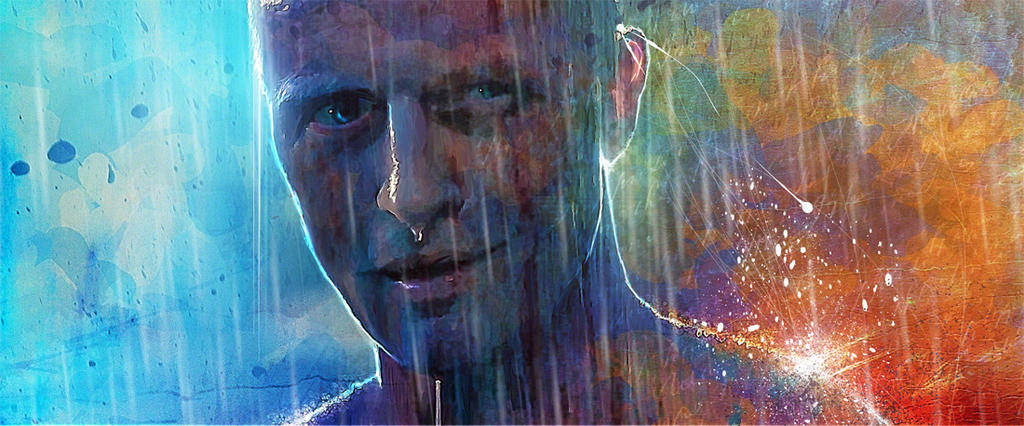
Roy Batty, leader and supposed "Mentor" of the rogue replicants, appears to be Deckard's "Shadow", in that he's the closest thing to a traditional villain in the film, showcasing some truly brutal tendencies, yet he also mirrors a lot of phobias given life within the film. Notions of what it means to be human run rife here, and the battle between Deckard's emotionally detached persona and the raw and untethered despair of Roy really showcase the differences between the two.

Image result for roy batty
Fig 4.
The "Herald" of the film is a shared role of two characters, "Bryant", a detective that forces Deckard out of retirement and into the paths of Roy Batty and the rogue replicants. This call to arms serves as the jumping off point into the larger events of the movie, but also serve to paint Deckard as the reluctant hero, one who actively questions his own actions. The other character is that of "Gaff", the shady detective who initially pulls Deckard into the meeting with Bryant, but also serves as Deckard's 'Virgil'-esque guide throughout the film. Jay Dyer, writing for "JaysAnalysis" says "We don’t learn much about Gaff, yet he does something very significant. Throughout the film, as he leads Deckard, he leaves origami figurines as symbolic indicators that reveal the method to Deckard himself." (Dyer, 2012) and it is true to say that Gaff definitely seems to be guiding Deckard, to where? to what? Ultimately it doesn't matter, unless you lend credence to the idea that Deckard is indeed a replicant. Gaff is also a character that inhabits more than one archetype, which is impressive for a character that has so few lines, he can be seen to be the "Trickster", though not in any obvious way, it is indeed, because of the breadcrumb trail of Origami that Gaff leaves for Deckard, that displays this. If one chooses to believe that Deckard is a replicant, then they can be seen as gentle reminders that Deckard is living a lie, Gaff's attempts at letting him know that he knows. But with the convoluted nature of the many different versions of the film, this can only be assessed by the viewer.

Ultimately, "Blade Runner" is an interesting specimen that excels at combining character archetypes in order to push the narrative into more meaningful places. It is no secret that Blade Runner is stylistically sound, but it is through the use of this complex system of 'archetype juggling' that keeps the characters fresh, believable and three dimensional. 

Bibliography

Anderson, Kyle "SCHLOCK & AWE: BLADE RUNNER’S RICK DECKARD IS THE LEAST HEROIC HERO" Nerdist.com [online] http://nerdist.com/schlock-awe-blade-runners-rick-deckard-is-the-least-heroic-hero/ [Accessed 10/10/2016]

Dyer, Jay "Blade Runner: Indepth Esoteric Analysis" jaysanalysis.com [online] https://jaysanalysis.com/2012/05/15/blade-runner-indepth-esoteric-analysis/ [Accessed 10/10/2016]

Lachniel, Mark "An Analysis Of Blade Runner" br-insight.com [online] http://www.br-insight.com/an-analysis-of-blade-runner [Accessed 10/10/2016]

Illustrations

Fig 1. Blade Runner Poster. [image] Available at: http://www.impawards.com/1982/posters/blade_runner_xlg.jpg [Accessed 10/10/2016]

Fig 2. Deckard Aims. [image] Available at: https://pmcvariety.files.wordpress.com/2013/05/bladerunner_sequel.jpg [Accessed on 10/10/2016]

Fig 3. Rachael smoking. [image] Available at: http://s3.amazonaws.com/digitaltrends-uploads-prod/2016/08/blade-runner-rachel-smoking.png [Accessed 10/10/2016]

Fig 4. Roy Batty Painting. [image] Available at: http://img12.deviantart.net/5e9d/i/2014/293/b/4/roy_batty___blade_runner_by_danielmurrayart-d83imgm.jpg [Accessed 10/10/2016]

Maya Tutorials - 2D rigging, complete.

Okay, so I dedicated most of Sunday to completing this tutorial and here is the end result - A complete 'left side'! I'm quite chuffed with how he's turned out. Next on my list is to start the Pipeline 01 line of tutorials. 


Friday, 7 October 2016

Maya Tutorials - Poma

Just finished the "Poma" tutorial, which turned out to be really enjoyable. The character itself was a joy to work with, and I really feel like I've learned something I can take with me into other projects, and perhaps something which I can adapt for when I revisit my "Germ Warfare" project from last year.

I'm still part way through the 2D rigging tutorial, which will be conquered this weekend, and I'll have hopefully made a start on the Head modelling tutorial that just went up.

Til' then,

Ciao.

Monday, 3 October 2016

"The Matrix" (1999) - A review (Hero's Journey)


Fig 1.

The “Wachowski’s”seminal science fiction film “The Matrix” (1999) was an immense success in terms of showcasing new techniques in cinema, as well as offering a new contemporary vision of ‘the hero’s journey’. Chris Richardson describes “The Matrix” as having “...much in common with Star Wars both in terms of content and the details of their creation. Both created influential new technologies in order to express their vision” (Richardson, 2003). Centering on Neo/Thomas Anderson, an office worker by day and hacker extraordinaire by night, as he ponders a question - What is the Matrix? This question leads to a realisation that the world he inhabits isn’t ‘real’; instead it is a computer simulation created by machines in order to keep the mind of humans locked away, rendering humanity ignorant as the machines harness energy produced naturally by the human body in order to sustain themselves.

It is perhaps fair to say of “The Matrix”, that this is about as archetypically close to the structure of the “Hero’s Journey” as a film can get, indeed, the very notion of Neo becoming the “One” - the most powerful being in the universe of “The Matrix” - is referenced several times in dialogue, as well as the driving force behind the plot. Neo becoming the “Hero”, awakening his universal awareness and saving the human race is the crux of the film. It’s also worth mentioning, that Neo’s ordinary world is signified by one of his dual persona’s. That of “Thomas Anderson”, a seemingly normal office worker who emits a sense of boredom at his own circumstance. Whereas his “Neo” persona provides escape from his mundane existence as he hacks his way to notoriety and gains the attention of “Morpheus” - Neo’s mentor, “supernatural aid”, and agent of change. Interestingly, in etymology Morpheus is the word for the greek god of dreams, which is another not so subtle hint at Neo’s journey focusing on awakenings.

Neo’s call to adventure is entirely unsubtle; Writing for matrixcommunity.org in a post titled “Neo's Journey: The Mythic Structure of The Matrix,” a blogger called Igpajo states that “Vogler (Christopher) says "The Call to Adventure establishes the stakes of the game, and makes clear the hero's goal: to win the treasure or the lover, to get revenge or to right a wrong, to achieve a dream, confront a challenge or change a life." Most of those apply to Neo. His goal is to discover what the Matrix is, to answer his call as "the one", to confront the challenge of the Matrix and change all human lives.” (Igpajo, 1999) His call - “Follow the White Rabbit” - is a reference to Lewis Carroll'sAlice in Wonderland” (1865) in which the titular character, Alice, enters Wonderland through a rabbit hole. The White Rabbit in this case, is a tattoo on the arm of a member of a goth entourage whom Neo is doing some hacker work for; Neo, noticing the tattoo decides to do just that, where he ultimately encounters Trinity in a club.

Neo could be seen to have two moments where he “refuses the call”. The first being when he tries to escape the ‘Agents’ in his office, the second when he is offered the chance to meet Morpheus after having the “bug” removed from his stomach. Ultimately this culminates in a third choice Neo has to make in order to escape the Matrix, passing the first threshold as Neo chooses the “blue pill” and wakes up in the real world.

The moment where Neo experiences the “belly of the whale” are his moments shared with the crew of the Nebuchadnezzar as Morpheus brings him up to speed on the state of the real world, but no sooner is this done, Neo is put into training, giving him a literal “road of trials” - and in this case, 3 of them, the fight with Morpheus, the jump training and the explanation of ‘The Agents’, this third simulation is particularly important as it introduces us to the danger that the Matrix poses to people like Neo; as he walks through a crowd in the simulation he becomes distracted by a woman in a red dress - significant as the “Woman as Temptress” - he is swiftly reminded that if he buys into the illusion that he is still ‘of the Matrix’ then it will surely destroy him. Once the simulation is over and Neo returns to the real world, Neo meets “the goddess”, personified here by Trinity, as she brings him food after a particularly nasty turn in a training simulation makes Neo vomit on the floor and pass out.

In many ways, Morpheus can be attributed to be a father figure to Neo, as he is responsible for Neo’s awakening in both the real world and the Matrix. However, it is interesting to question the very nature of the Matrix and the way humans are now ‘grown’ instead of born conventionally mean that Neo has no Father in the traditional sense. But perhaps Neo can be seen to be a child of the Matrix itself? Its rules and existence personified as a paternal authority over not only Neo, but every child of The Matrix. As such, Neo’s journey is about reconciling himself with the Matrix, its control and what it means to be “The One”.

Speaking of “The One”, Neo’s apotheosis is much later in the film, saved for the third act wherein Neo and Trinity rush to rescue a captured Morpheus (The ultimate boon), who is being held by “The Agents”. In rescuing Morpheus, Neo achieves something which the characters refer to over the course of the movie as “Impossible”, thereby cementing his godhood in-universe and the burgeoning nature of both his awareness and skills.

Image result for neo
Fig 2.
From then, the remaining steps of “the hero’s journey” play out in quick succession, Neo’s “refusal of return” is very much in the moment where, instead of running from Agent Smith, he turns and faces him, beginning to believe in his growing power; His “magic flight” becoming the race Neo and Smith enter to an exit point from the Matrix. Running parallel to this are events in the real world, wherein the machines have sent Sentinels to destroy the Nebuchadnezzar and her crew - the only way of destroying these creatures being a costly EMP device that cannot be initiated without killing anyone currently ‘plugged in’ to the Matrix. In a particularly tense sequence of events, Neo just makes it to the exit point when he is shot and killed by Smith, just as the Sentinels reach and begin to destroy the Nebuchadnezzar. With Neo dead, Trinity explains that he cannot be dead because the Oracle told her that she would fall in love with “The One” and that she is in love with Neo, so he must be “The One”, sealing it with a kiss that revives Neo in the Matrix, very much becoming a moment of “help from without”.

At this point, Neo is “The One”, he has attained ultimate understanding of the universe and with it, ultimate power over his surroundings. And once he has displayed this power by destroying Agent Smith, he returns home - to the real world - thus crossing the “return threshold”. Richardson describes this moment as “The final aspect of the hero’s journey is the return. After his separation from the world of the Matrix and his initiation into truth, Neo, like all great heroes, like the bodhisattva eschewing nirvana for others’ liberation, returns to the world.” (Richardson, 2003). Neo then demonstrates that he is a master of two worlds by returning to the Matrix sometime afterwards, promising an unseen listener - but actually just addressing the audience - that he will free them all. He is forever changed, Thomas Anderson is dead, and Neo, as “The One”, exists.

Fig 3. 


The interesting thing about “The Matrix” above other typical examples of “the hero’s journey” is it’s clear signposting of said journey, within the dialogue itself. In going about it this way, the Wachowski’s have managed to insinuate that, in this case, “the hero’s journey” isn’t just a methodology used to generate a story, but rather, the story itself.


Bibliography

“Igpajo” “Neo's Journey: The Mythic Structure of The Matrix” matrixcommunity.org [online] http://www.matrixcommunity.org/archives/WB/002288.html [Accessed 03/10/2016]

Richardson, Chris “The Matrix as the Hero's Journey” theosophical.org [online] http://www.matrixcommunity.org/archives/WB/002288.html [Accessed 03/10/2016]


Illustrations

Fig 1. The Matrix Poster. [image] Available at: http://www.impawards.com/1999/posters/matrix_ver1.jpg [Accessed 03/10/2016]
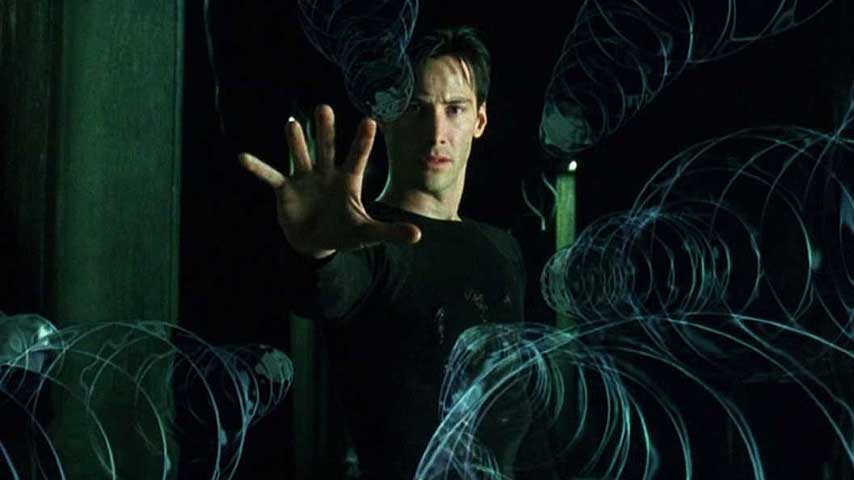

Fig 2. Neo's Understanding. [image] Available at: http://download.gamezone.com/uploads/image/data/1201507/article_post_width_Thomas-Anderson-aka-Neo-the-Matrix-1024x516.jpg [Accessed 03/10/2016]


Fig 3. The One. [image] Available at: http://assets.vg247.com/current//2016/04/matrix_neo.jpg [Accessed 03/10/2016]