-->

Thursday, 7 January 2016

Life drawing update, the sixth!

5 minute poses

20 minute pose, edited. 
Experimentation with pointillism

As this was the first life drawing class since the christmas break, It was good to have a subject to draw again. I tried to do something different in each piece, this session. I think I will be taking pointillism further in my own studies, but I also quite enjoy the second image as I tried to be a bit bolder with colour, and further to that, making something altogether "new" in a post edit. 


Wednesday, 6 January 2016

"La Jetée" (1962) - A review.

Fig 1.

La Jetée (1962) directed by Chris Marker is an experimental short film concerning time travel, the extent of its reach felt in movies such as Terminator, 12 Monkeys and scores of other lesser films concerning time travel - perhaps “Somewhere in time” (1980) which utilises a similar device for time travel, sending a mind through time. Primarily utilising still imagery with rapid cuts to convey the story. At 28 minutes, La Jetée never outstays it’s welcome despite its use of media, and in fact benefits from it. Centering on a young boy at an airport that spies a beautiful woman before witnessing the mysterious death of a man by an unknown assassin before skipping through an atomic war that has rended Earth inhospitable and unable to support life; the boy - now a man - becomes a feasible test subject for time travel experiments due to his strong connection to the past, in particular the image of the woman, and the dying man; resulting in a series of time travel experiments in order to obtain supplies to restart the human effort.


Fig 2.
Perhaps most notable of La Jetée is its use of still imagery. A device it uses almost narratively during proceedings, for it replicates a sense of the dreamlike; but also a sense of recollection, of memory; scattered and nonsensical. It is an examination not only of time travel and memory on film“...but for the way in which the form can twist our most cherished versions of reality inside out.” (Sellers, 2005) This idea crystallizes in a moment where La Jetée breaks its visual rules with a longingly held shot of the woman that has held the traveller's obsession through his disjointed life. In this ‘shot’ stills begin to merge to form a rudimentary animation before giving way to a full shot of her eyes opening in gaze towards the camera. But even so “The film emphasizes the illusion of time lapse and movement perceived both by the characters within the film” (Filmslie, 2016) and it is with these editing tricks that La Jetée becomes more than the sum of its parts. Michel Gondry once stated of the film...“The human brain forgets the cuts” and this is important in further distinguishing the still technique as more than a stylistic flare, as though it is intrinsic to the themes of La Jetée; memory, mortality and our relationship to past events. Are we beholden to the past? Is our recollection unreliable? Do we perhaps cling to the fragments of happiness?


Fig 3.
In terms of sound design, La Jetée shines, an article discusses that “The sound is the only truly continuous element in La Jetee. As such, it is the main source of temporality and rhythm” (Filmslie, 2016) as it is with the narration and constant audio interaction that the audience is pulled through the short, making the photo-novel increasingly accessible until it is as though you are watching a moving picture, and indeed this interaction between the still picture and almost chaotic soundscape is moving in itself, adding poignancy that would be lost if done otherwise.

It is easy to draw comparison to much later films, but it is in La Jetée that the deconstruction of the contained themes is perhaps most pure. A powerful and utterly mesmerising 28 minutes.


Bibliography


Sellers, Simon. 'Retrospecto: La Jetée'. ballardian.com. [online] Available at: http://www.ballardian.com/la-jetee [Accessed 6 Jan. 2016]


Filmslie ‘Chris Marker’s La Jetee Analysis: Mortality and the Illusion of Time’ Filmslie.com [online] Available at: http://filmslie.com/chris-marker-la-jetee-analysis-temporality/ [Accessed 6 Jan. 2016]


Illustrations

Fig 1. La Jetée poster. [image] Available at: http://citygallery.org.nz/sites/default/files/lajetee%20at%20City%20Gallery.jpg [Accessed 6 Jan. 2016]

Fig 2. La Jetée still. [image] Available at: https://allfordeadtime.files.wordpress.com/2010/01/fetch.jpg [Accessed 6 Jan. 2016]

Fig 3. La Jetée still [Image] Available at: https://s3.amazonaws.com/criterion-production/product_images/1505-b2cd0ce10ae50ccaddf336cd797dbd2c/LJ_SS_Page_Still_original.jpg [Accessed 6 Jan. 2016]


Friday, 18 December 2015

Maya Tutorial 07 - Lighting and Rendering

All finished, I really enjoy the way adjusting the lighting can evoke different moods within the same scene. Very useful going ahead!


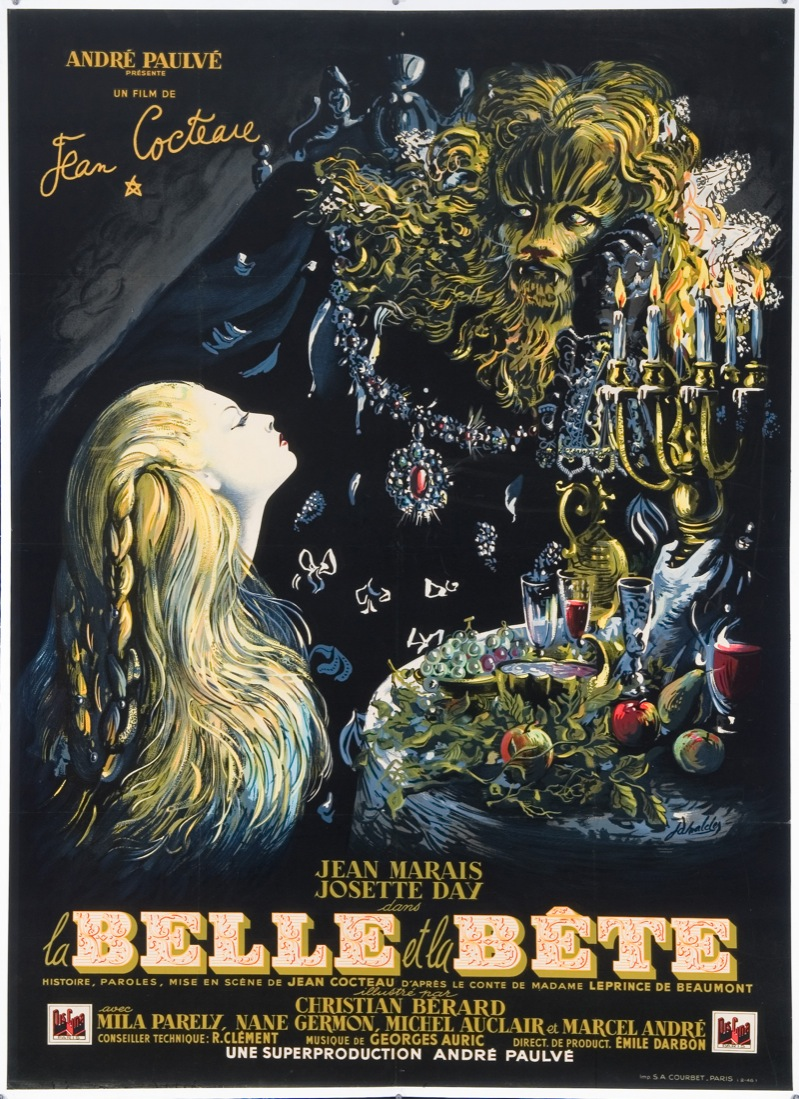
La Belle et la Bete (1946) - A review.


Fig 1.


La Belle et la Bete (1946) directed by Jean Cocteau is the filmic retelling of the fairytale - Beauty and the Beast. But it is a film designed not only for the child who enjoys fairytale, for at the start we adults are given a request by Cocteau - “I ask of you a little of this childlike sympathy…” and with such a preamble we are put into the mindset that this isn’t merely a tale for children, even if we are to suspend disbelief as a child - certainly an engaging motif to ponder during the course of the 93 minute exercise in the surreal. 

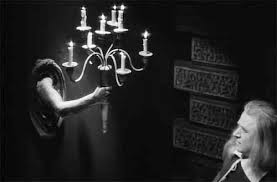
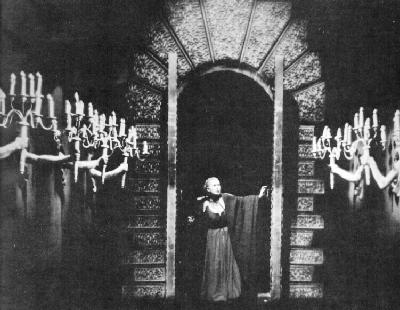
Cocteau himself is described as a poet and surrealist and this is something of import when considering Beauty and the Beast for the art direction follows suit with this sensibility. Dreamlike but never crossing over into the grotesque, Cocteau's vision of a shifting reality is mesmerising throughout. Indeed, as soon as Belle enters the Beast's castle she is confronted with sights of “...candelabra held by living human arms that extend from the walls. The statues are alive, and their eyes follow the progress of the characters” (Ebert, 1999) and in fact, the film goes further to the realms of eroticism. “Cocteau uses haunting images and bold Freudian symbols to suggest that emotions are at a boil in the subconscious of his characters” (Ebert, 1999). Interestingly, when confronted by these detached arms, they are all male, all of the arms holding candles are male and perhaps there is something in that. Almost as to give rise to ideas that the Beast’s abode is a seat of masculinity or some place of male power.


Fig 2.
The undercurrent of eroticism is strife here. The Beast - following the same tradition of the Wolf Man wherein the characteristics of masculinity form the main struggle within the Beast, at points his hands literally smoke after having killed someone to give rise to feelings of shame, shame that so repulses when seen by Belle. “This is acknowledged finally when Beauty (Josette Day) tells the Beast (Jean Marais) "I like being afraid... with you." (Macnab, 2014) This idea of sexuality and repulsion is audibly put to us and at once discusses the notion of sexual attraction to the dangerous qualities of masculinity.  

La Belle et la Bete is an early example of a traditional tale imbued with that of the else, a surrealness and presence that is only addressed in the mise en scene to produce a meta narrative of sexuality. Smart, Inventive and extremely watchable La Belle et la Bete is a masterclass on what can be achieved through simple means.  


Fig 3.


Bibliography


Ebert, Roger. 'Beauty and the Beast review'. rogerebert.com. [online] Available at: http://www.rogerebert.com/reviews/great-movie-beauty-and-the-beast-1946 [Accessed 18 Dec. 2015]   


Macnab, Geoffery. ‘La Belle Et La Bete: Film review - Cocteau's Forties fantasy is still a thing of real beauty’ independant.co.uk [online] Available at: http://www.independent.co.uk/arts-entertainment/films/reviews/la-belle-et-la-bete-film-review-cocteaus-forties-fantasy-is-still-a-thing-of-real-beauty-9035506.html [Accessed 18. Dec. 2015]


Illustrations


Fig 1. Beauty and the beast Poster. [image] Available at: http://theredlist.com/media/database/muses/couples/fiction/beauty-and-the-beast/018-beauty-and-the-beast-theredlist.jpeg [Accessed 18 Dec. 2015]


Fig 2. Arm Candelabra [image] Available at: http://www.cinematraque.com/wp-content/uploads/2012/11/bras_belle_bete.jpg [Accessed 18 Dec. 2015]


Fig 3. Belle surrounded by arms [image] Available at: http://www.dvdjournal.com/reviewimgs/b/beautyandthebeast_cc_imgs/beautyandthebeast_cc_03.jpg [Accessed on 18 Dec. 2015]